DUTY
From Obligation to Oath, and from Instinct to Responsibility

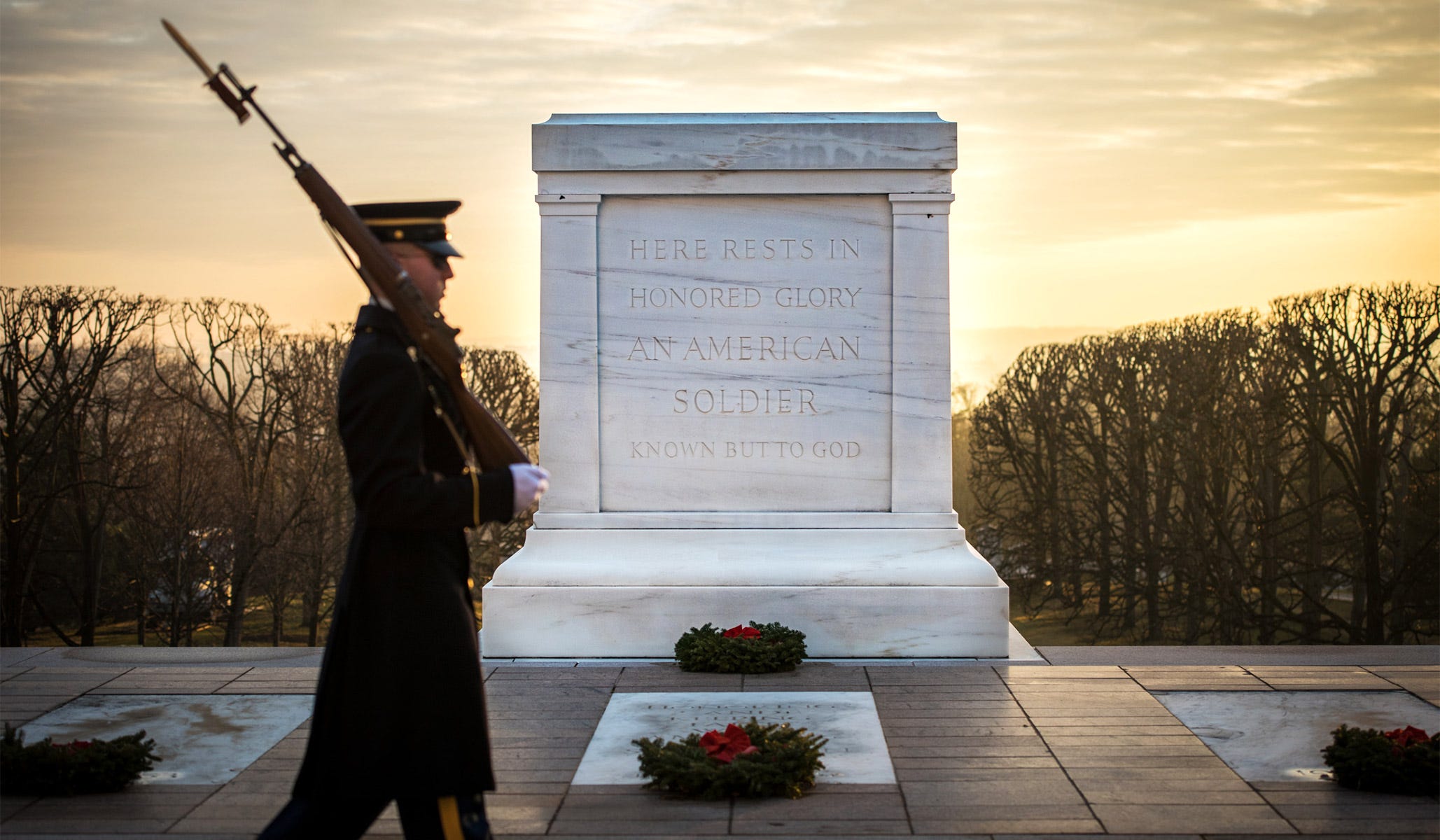
This series began by asking why Army Values exist at all. The first article argued that they are not slogans but structural beams, moral engineering designed to regulate instinct, preserve agency, prevent internal collapse, and allow soldiers to fight without disintegration and return without exile. The second article examined Loyalty and showed that loyalty must be ordered: horizontal bonds must be nested within constitutional and professional commitments, and leaders must return loyalty downward with seriousness and resolve.
Now we turn to Duty.
If Loyalty answers the question to whom am I bound?
Duty answers the harder question: what do I owe?
Few moments in American military history have captured the moral gravity of this better than the farewell address delivered at West Point by Douglas MacArthur in 1962. In that speech, he reminded the Corps:
“Duty, Honor, Country, those three hallowed words… dictate what you ought to be, what you can be, what you will be” (MacArthur, 1962).
MacArthur did not treat duty as an accessory to character. He treated it as formative, something that dictates identity itself. That is the frame in which we must approach this value. Loyalty binds us to people and principles. Duty defines what that binding requires when preference, emotion, and comfort fall away.
The Word Itself: A Debt, Not a Feeling
The word duty comes from the Old French deu and devoir, rooted in the Latin debitum, “that which is owed.” The meaning is financial before it is emotional. A debt is not something one performs when inspired. It is something one pays because it is owed (Oxford English Dictionary, n.d.).
This older meaning matters.
Modern culture often treats duty as an oppressive relic, something imposed externally, a restriction on autonomy. But etymologically and historically, duty was never about how one felt. It was about obligation attached to role. A father owed protection. A son owed honor. A magistrate owed justice. A soldier owed steadfastness.
As John Quincy Adams expressed succinctly:
“Duty is ours; results are God’s” (Adams, 1842/2002).
That statement captures the psychological architecture of duty. It frees the individual from illusion of omnipotence while binding him to obligation. One cannot guarantee outcomes. One can guarantee faithfulness.
Duty precedes emotion.
Duty persists when emotion fails.
Duty is binding even when inconvenient.
An army built on inspiration will falter when inspiration fades. An army built on obligation endures when fear rises.
The Greek Frame: Function and Role
The Greek moral imagination did not begin with abstract rights. It began with function. In the ethics of Aristotle, virtue is tied to the fulfillment of one’s role in accordance with reason (Aristotle, trans. 2009). A good knife cuts well. A good citizen fulfills civic responsibilities. A good soldier stands firm.
For the Greeks, excellence (aretē) was not self-expression. It was performing the task appropriate to one’s station. The warrior who abandoned his shield was not merely afraid; he had failed in his function.
Greek tragedy reinforced this understanding. Heroes were bound by obligations that did not disappear because they were painful. To refuse one’s role was not liberation, it was dishonor. Even when obligations conflicted, the assumption was that duty existed and must be navigated, not dissolved.
The Greek world was small by modern standards, but its moral insight remains relevant: human beings live within roles, and roles carry obligations that define character.
The Classical and Early American Inheritance
European moral thought carried this forward. Roman civic philosophy revolved around officium, obligations imposed by one’s station within the republic (Cicero, trans. 1991). Later Christian moral theology framed duty as fidelity to vocation. Early modern political thought tied duty to covenant and oath.
In nineteenth-century American military thought, expressed in letters, speeches, and private reflections of officers confronting civil war, the language of duty was austere and unsentimental. A man might personally regret conflict. He might foresee devastation. He might feel torn between layered loyalties. But once oath and obligation were clear, duty demanded constancy.
That understanding echoes the closing charge of Abraham Lincoln at Gettysburg:
“It is for us the living… to be dedicated here to the unfinished work which they who fought here have thus far so nobly advanced” (Lincoln, 1863/1992).
Duty is not abstract. It is owed to the dead and to the unfinished task. It binds the living to responsibilities inherited from sacrifice already made.
This same seriousness animated the Newburgh Address delivered by George Washington in 1783, when officers of the Continental Army were tempted toward grievance and possible insubordination. Washington urged restraint rooted in honor and obligation:
“Let me conjure you… as you value your own sacred honor… to express your utmost horror and detestation of the Man who wishes… to overturn the liberties of our Country…” (Washington, 1783/2015).
Washington understood that armies fracture when obligation gives way to passion. Duty to constitutional order had to supersede anger, frustration, or factional loyalty. Professional restraint was not weakness; it was fidelity to oath.
The classical and early American conception of duty shared a common assumption: obligation is not negotiable because feeling changes.
The Evolutionary Ground Beneath Philosophy
Long before philosophers articulated duty, human survival depended upon it.
Human children are born neurologically unfinished. They require years of protection and provisioning. Elders require care. Grandparents contribute essential labor, knowledge, and childcare. Anthropologists have long observed that humans are unusual among primates in the role extended kin play in offspring survival (Hrdy, 2009).
Lineages persisted when duties flowed reliably across generations. Parents who sacrificed for children raised adults who protected them in old age. Families in which obligation collapsed disappeared.
Duty was not invented by priests or generals. It was selected by survival.
If children did not internalize obligation to parents, those parents died unsupported. If adults abandoned obligations to offspring, those offspring did not survive to reproduce. In a world without pensions, hospitals, or state support, duty was the only insurance policy.
Duty was civilizational glue before civilization existed.
The Modern Dissolution of Obligation
Modern Western society increasingly treats obligation as optional. Autonomy is elevated above fidelity. Self-expression outweighs inherited role. Relationships are evaluated through the lens of personal fulfillment rather than enduring responsibility.
One sees this in fractured families where adult children sever ties with parents over political disagreement. One sees it in cultural narratives that frame inherited duty as psychological oppression. One sees it in institutions that treat obligation as transactional rather than binding.
When duty becomes contingent on agreement or emotional comfort, it ceases to function as duty at all.
Benjamin Franklin reportedly warned his fellow revolutionaries at the signing of the Declaration:
“We must all hang together, or… we shall all hang separately” (Franklin, 1776/1956).
Whether uttered precisely in that form or not, the sentiment captures a structural truth. Obligation binds coalitions under pressure. When shared duty dissolves, fragmentation follows.
A person who has never internalized obligation to parents, siblings, or community will struggle to internalize obligation to abstract institutions. The discipline required to fulfill military duty is not conjured from nowhere. It grows from earlier moral training grounds.
Marriage and Family as the Smallest School of Duty
One of the last places in modern life where the language of oath still survives is marriage.
Traditionally, marriage is not merely companionship. It is a public declaration of obligation. It is sworn before witnesses precisely because it creates debt, duties owed regardless of mood.
Across cultures and centuries, the role of husband and father carried recognizable duties: protection, provision, steadiness, the bearing of hardship for the sake of those dependent upon him. He owed fidelity not because romance demanded it, but because stability required it. He owed presence, not merely income. He owed discipline over his impulses because his family’s security depended upon it.
The role of wife and mother carried duties equally structural: fidelity, nurture, stewardship of the household, moral formation of children, partnership in sustaining continuity. Human offspring are uniquely dependent among mammals (Hrdy, 2009). Without maternal investment and stability, survival plummets. The mother’s obligation was not decorative. It was civilizational.
And children owed something in return.
They owed honor. They owed gratitude. They owed care in old age. They owed the continuation of the lineage and the preservation of family memory.
Marriage, then, is the smallest covenantal unit of civilization. It binds individuals into a stable structure capable of enduring hardship. It survives precisely because it treats obligation as binding even when emotion fluctuates.
When that understanding weakens, something deeper weakens with it.
A society that grows uncomfortable with marital obligation will grow uncomfortable with any obligation that restricts autonomy. And when autonomy becomes the highest good, duty becomes suspect.
The military oath stands in direct tension with that trend.
Like marriage vows, it is public. It is binding. It requires sacrifice. It endures through hardship. It does not dissolve when feelings change.
Marriage is not identical to military service. But structurally, both are covenants.
Both create debt.
Both require constancy under strain.
And both collapse when obligation becomes conditional.
From Instinct to Oath
Human instincts favor self-preservation and kin preference. Evolution shaped us to protect those genetically or emotionally close to us. The professional soldier must override that instinct.
He must risk death for non-kin.
He must obey lawful orders issued by individuals unrelated to him.
He must subordinate preference to mission.
He must stand in place while every neurobiological alarm screams to flee.
Duty is the cultural override that makes this possible.
The oath taken by American soldiers is extraordinary in human history. It binds them not to a monarch, not to a bloodline, not to a tribe, but to the Constitution of the United States.
Here, the reciprocal nature of duty becomes clear. As Calvin Coolidge once observed:
“The nation which forgets its defenders will itself be forgotten” (Coolidge, 1923/1991).
Duty is never one-directional. A republic asks sacrifice of its soldiers; it owes them seriousness of purpose and memory in return.
On the battlefield, motivation evaporates. Discipline can fracture. What remains is what has been internalized as non-negotiable.
Duty is the last anchor.
Duty and Moral Coherence
Moral injury often arises when duty is betrayed or rendered impossible. A soldier who believes he has failed his duty may fracture internally. A soldier who sees leaders violate their obligations downward may experience disillusionment deeper than fear (Shay, 1994).
Clear duty provides interpretive coherence. When obligations are understood and honored, even amid tragedy, suffering can be integrated. When obligations are obscured or manipulated, suffering metastasizes into moral confusion.
Duty does not prevent tragedy.
It prevents disintegration.
What Duty Must Mean for a Soldier
For the soldier, duty cannot be sentimental. It must be concrete.
It means fulfilling one’s role whether watched or unwatched.
It means maintaining standards when fatigue tempts compromise.
It means training when comfort suggests delay.
It means finishing the mission when applause is absent.
It means honoring the oath when politics swirl.
Duty transforms a private citizen into a professional warrior by anchoring obligation. It is the debt owed to comrades, to leaders, to the Constitution, to the American people, and to the dead who trusted the living to continue the work.
Duty is not preference.
It is not mood.
It is not ideology.
It is the debt one pays because one has sworn to pay it.
And without it, no army, no matter how equipped, trained, or technologically advanced, can stand.
References
Adams, J. Q. (2002). Speech on the right of petition (Original work delivered 1842). Congressional Record.
Aristotle. (2009). Nicomachean ethics (W. D. Ross, Trans.). Oxford University Press.
Cicero. (1991). On duties (M. T. Griffin & E. M. Atkins, Trans.). Cambridge University Press.
Coolidge, C. (1991). Veterans Day remarks (Original work delivered 1923). U.S. Department of Veterans Affairs.
Franklin, B. (1956). The papers of Benjamin Franklin (L. W. Labaree et al., Eds.). Yale University Press. (Original statement 1776)
Hrdy, S. B. (2009). Mothers and others: The evolutionary origins of mutual understanding. Harvard University Press.
Lincoln, A. (1992). The Gettysburg Address (Original work delivered 1863). Library of America.
MacArthur, D. (1962). Duty, Honor, Country (Farewell address to the Corps of Cadets). United States Military Academy.
Oxford English Dictionary. (n.d.). Duty. Oxford University Press.
Shay, J. (1994). Achilles in Vietnam: Combat trauma and the undoing of character. Scribner.
Washington, G. (2015). Newburgh Address (Original work delivered 1783). Mount Vernon Ladies’ Association.
Too damn many gems in this essay to comment specifically, Matt. I would recognize a meta-theme that a source of moral rot in 21st century US is the tendency to view all duty as an outrageous intrusion into one’s sphere of entitled narcissism (“How DARE you demand anything of me?!”). This attitude, magnified through the social media echo chamber, is a corrosive acid that eats away at the very fiber and foundation of a civic society.
“(Values) are not slogans but structural beams, moral engineering designed to regulate instinct, preserve agency, prevent internal collapse, and allow soldiers to fight without disintegration and return without exile.”
Did you really manage to pack all that wisdom into one sentence, Matt? Color me impressed! 👏