Loyalty
From Tribal Bonds to Professional Allegiance

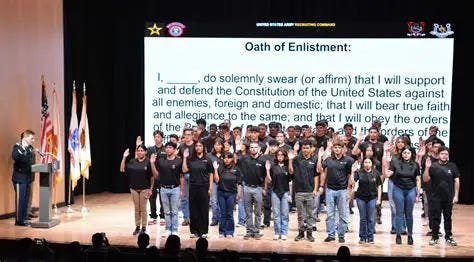
A professional fighting force does not hold together because of equipment, doctrine, or even leadership alone. It holds together because it has solved an ancient human problem: how to take the instincts of primates shaped by millions of years of small-band survival and turn them into a disciplined, coherent coalition capable of fighting as one. The Army expresses this solution through its Values. But values, if they are to matter, must do more than decorate PowerPoints. They must reshape how human beings order their loyalties.
Loyalty stands first among the Army Values for a reason. Every other value, duty, respect, honor, integrity, personal courage, rests on where loyalty is anchored and how it is expressed. But loyalty is also the most easily misunderstood, because human beings evolved with a form of loyalty that served small groups, not nations. Our evolutionary inheritance built loyalty to family, kin, and the small coalition that shared danger with us. For most of human history, a person’s world was no larger than a few dozen faces. In that world, loyalty meant protecting those closest to you without hesitation, even when doing so violated broader norms.
Most modern definitions reflect this narrower, instinctive version of loyalty. They describe loyalty as an emotional bond between friends, teammates, or people we care about. But that is a modern softening of an older, harder concept. The word itself comes from lex, the Latin root for “law” and “binding obligation,” flowing through Old French loial, “faithful to an oath,” “true to one’s sworn duty,” “reliable.” Loyalty originally meant fidelity to a higher order, not affection. A man was loyal if he kept faith with his obligations, upheld his oath, and honored the principles he served, even when instinct pulled him elsewhere. This historical meaning is far closer to what a professional army requires, because it frames loyalty as a disciplined commitment rather than a feeling.
Modern armies cannot run on instinctive loyalty alone.
But they cannot function without it either.
The strongest, deepest loyalty a soldier feels is horizontal, the bond with the people who share hardship, fear, and danger beside him. This is the loyalty that makes a man move toward fire when instinct demands he flee. It is the loyalty that drives people to crawl into the kill zone to drag a friend out, to stay calm in ambushes, to hold a line that should not be holdable. It is older than written language, older than agriculture, older even than tribes. It is the loyalty celebrated in epics from Gilgamesh to The Iliad, where a single friend’s death outweighs the fate of an entire army.
But horizontal loyalty carries a shadow.
Its power is double-edged.
Because the same fierce devotion that leads men to die for each other can also lead them to lie for each other. It can lead them to hide misconduct, to conceal cowardice or cruelty, to rationalize the breakdown of discipline. Horizontal loyalty can become a closed world, a moral universe unto itself, where the group’s cohesion becomes more important than the profession’s standards. It is the psychological mechanism behind countless collapses in ethical behavior, precisely because it feels noble from the inside.
This dynamic is laid bare in Ordinary Men. Christopher R. Browning’s historical study examines Reserve Police Battalion 101, middle-aged, non-ideological German policemen who became direct participants in the Holocaust. Over the course of their deployment in occupied Poland, they carried out mass shootings of Jewish civilians and assisted in deportations to extermination camps (Browning, 1992). Their descent was not driven primarily by sadism or ideological fanaticism. It was driven by a perverse form of camaraderie: a refusal to separate themselves from their comrades by refusing to participate. Loyalty became a shield against conscience, allowing ordinary men to commit extraordinary cruelty because they chose loyalty to the group over loyalty to moral truth. It was loyalty misordered.
A similar inward collapse appears in Black Hearts, which chronicles the unraveling of a platoon from the 101st Airborne Division during a prolonged and demoralizing deployment in Iraq. As discipline deteriorated and leadership faltered, loyalty contracted into a tight clique whose members encouraged one another’s worst impulses (Frederick, 2010). Their loyalty became tribal rather than professional, severed from the standards of the Army and the morality of the mission. The inner circle replaced the institution, with catastrophic results.
Horizontal loyalty must therefore be governed, not celebrated uncritically.
It must be shaped, directed, and subordinated to higher loyalties, mission, profession, Constitution, and the moral framework the Army exists to defend.
This reordering is not instinctive.
It must be taught with relentless clarity.
Reordering loyalty does not happen naturally. Human beings are not born valuing principle over tribe. Evolution shaped us to guard the inner circle, family, friends, the small coalition that shares danger with us. In a world of predators and rival groups, that instinct was adaptive. It kept the band alive. But in a professional army, that instinct can become dangerous if it is not deliberately reshaped. A force built on tribal loyalty cannot police its own standards, cannot maintain discipline, and cannot reliably serve a republic.
This is why every professional military invests so heavily in moral formation. The task is not simply to teach tactics, law, or leadership techniques. It is to build a culture where loyalty is ordered, where loyalty to mission, values, and profession outweighs loyalty to the small group when the two collide. Without that ordering, armies behave like clans. With it, armies can hold enormous destructive power without becoming a threat to the society they defend.
One of the clearest examples of how a profession teaches this is the Honor Code used at the United States Military Academy. The full code states:
“A cadet will not lie, cheat, or steal, or tolerate those who do.”
It is a simple sentence, but it encodes a profound insight. The first clause, will not lie, cheat, or steal, shapes the behavior of the individual. The second clause, or tolerate those who do, shapes the behavior of the group. And it is the second clause that directly confronts evolutionary wiring. In a small-band environment, looking the other way is loyalty. In a profession, looking the other way is betrayal.
The Honor Code teaches that loyalty to truth, to integrity, and to the standard must sometimes override loyalty to friends. It teaches that moral courage is not only bravery under fire, but the willingness to hold the line inside the tribe. It teaches that protection of the small group at the expense of the larger mission is not loyalty at all—it is the beginning of corruption.
But the point is not about West Point.
The point is about the profession of arms.
Every military academy, NCO school, officer basic course, and unit-level leader seeks to instill a version of the same lesson: that a professional army cannot survive on tribal loyalty alone. Tribal loyalty is powerful, it motivates sacrifice, courage, and cohesion, but it can also lead to misconduct, cover-ups, and the collapse of ethical restraint. A profession requires loyalty that includes the group but does not end there. It requires loyalty to the mission, to virtue, to truth, to the Constitution, and to the soldiers one leads and serves.
The Honor Code is simply a visible example of that deeper requirement:
professional loyalty must override individual instinct, not because comradeship is unimportant, but because the profession collapses if instinct goes unchecked.
But loyalty does not fracture only at the level of the small group.
It also fractures along the oldest human fault lines: race, ethnicity, state, and cultural subgroup.
Loyalty to subgroup is one of the most powerful forms of instinctive allegiance human beings possess. For most of human history, survival depended on kinship networks, people who looked like you, spoke like you, and shared ancestral identity. These loyalties run deep because evolution built them deep. They explain why people naturally gravitate toward “those like us.” But in a national, constitutional army, subgroup loyalty can become a threat if it is elevated above professional loyalty.
The American Civil War provides the starkest example. Before the war, many citizens identified more strongly with their states than with the nation as a whole. When those loyalties collided, men followed their state flags into battle against the very republic they had previously sworn to defend. This was not merely a political crisis—it was a demonstration of how subgroup loyalty, when elevated above constitutional loyalty, can fracture an army and imperil a nation.
The same dynamic appears in quieter, more subtle ways today. Soldiers may feel stronger affinity with others of the same race, region, religion, or cultural background. Such affinities are natural. But when they begin to influence judgments about discipline, trust, fairness, or justice, they risk undermining the unity of the force. They encourage soldiers to see one another not as members of a single profession but as representatives of rival tribes operating in the same uniform.
Once tribal loyalty becomes more salient than professional loyalty, trust collapses.
And without trust, a military becomes a collection of factions rather than a fighting force.
The United States is one of the most diverse public institutions on the planet. Its military cannot function without a loyalty that supersedes every sub-identity. That loyalty cannot be to race, state, party, or ancestry. It must be loyalty to the profession, to the mission, to the Constitution, and to the American People who authorize and expect its defense. Those broader loyalties are the only ones strong enough, and wide enough, to bind a diverse force into a coherent whole.
And when a soldier swears loyalty to the Constitution, he is swearing loyalty in exactly that way:
not to blood, nor to tribe, but to We the People, a civic identity chosen, not inherited; a nation bound not by lineage but by a commitment to mutually supported freedom; a political community whose legitimacy comes from that commitment rather than kinship.
But ordered loyalty is not just about constraining horizontal and subgroup loyalties.
It is also about the directions loyalty must flow within a hierarchy.
Soldiers owe loyalty upward: obedience, discipline, devotion to the mission. But leaders owe loyalty downward: clarity, competence, honesty, and a moral seriousness equal to the risks they impose. A leader who demands loyalty from subordinates must demonstrate fidelity in return, because loyalty that flows only upward is not loyalty at all. It is obedience masquerading as virtue.
And downward loyalty is not expressed through praise or sentiment.
It is expressed through stewardship, the sober acceptance that when you ask people to kill and risk being killed, you owe them a purpose worthy of that risk.
That purpose is victory.
War is not an exercise in governance or a public works program conducted under fire. It is a contest of wills in which human beings are ordered to inflict and endure violence. When leaders commit their soldiers to that contest, loyalty downward demands a corresponding commitment to winning. Only victory can give meaning to sacrifice. Only victory can justify the price. Without the will to win, lives become bargaining chips in a conflict no one intends to resolve.
A leader who accepts casualties without the determination to defeat the enemy is not loyal to his soldiers. He is consuming their loyalty while withholding his own. Euphemisms such as “end state,” “security force assistance,” or “conditions-based progress” cannot hide the moral reality: if a leader lacks the will to win, he has no moral right to ask others to die. Loyalty downward requires the will to secure victory so that the living do not bleed for goals their leaders never intended to achieve.
This is why downward loyalty is the true test of the value.
And it is why the most destructive betrayals of loyalty rarely occur at the squad level.
They occur wherever leaders ask others to risk everything without the resolve to see the mission through.
None of this diminishes the centrality of horizontal loyalty. It remains the beating heart of combat motivation, the reason soldiers walk into danger and hold fast when it would be easier to break. But horizontal loyalty becomes virtue only when it is nested within a moral structure that reaches upward and downward as well. Unbounded, it becomes clan loyalty. Unexamined, it becomes corruption. Unordered, it becomes tragedy.
Loyalty is therefore not merely a feeling and not merely a bond. It is the architecture that allows human beings to act together under the moral and psychological weight of war. It binds individuals to each other, units to their missions, leaders to their soldiers, and the entire profession to the constitutional order it serves. And loyalty to that order is not loyalty to parchment, it is loyalty to the American people themselves. The Constitution is the mechanism by which We the People express the laws, limits, rights, and responsibilities that define our common life. To swear loyalty to it is to swear loyalty to the sovereign public whose authority created the Army and whose trust legitimizes its power. Rightly ordered and reciprocated, such loyalty produces a fighting force capable of operating under the extreme pressures of combat and returning home intact. Wrongly ordered or unreturned, it becomes the beginning of decay.
Loyalty is the first Army Value because it is the one on which all others depend.
It is not simple.
It is not sentimental.
It is a disciplined commitment that demands seriousness from leaders and moral clarity from followers.
And it is the only foundation on which a professional army can stand.
References
Browning, C. R. (1992). Ordinary men: Reserve Police Battalion 101 and the final solution in Poland. HarperCollins.
Clausewitz, C. von. (1976). On war (M. Howard & P. Paret, Eds. & Trans.). Princeton University Press. (Original work published 1832)
Frederick, J. (2010). Black hearts: One platoon’s descent into madness in Iraq’s Triangle of Death. Broadway Books.
Homer. (1990). The Iliad (R. Fagles, Trans.). Penguin. (Original work composed ca. 8th century BCE)
Mao Zedong. (1967). On protracted war. Foreign Languages Press. (Original work published 1938)
“A force built on tribal loyalty cannot police its own standards, cannot maintain discipline, and cannot reliably serve a republic.”
EVERY group/organization is at risk of regressing/devolving back to horizontal loyalty. This is why self-monitoring of physicians, politicians, police etc solely by their own tribal members usually results in a series of catastrophic failures. This is where functions like “civilian” (outsiders) oversight/review boards, ombudsmen and inspectors general are critical to the enduring success of most tribes. Sunlight is always the best disinfectant!
“Loyalty became a shield against conscience, allowing ordinary men to commit extraordinary cruelty because they chose loyalty to the group over loyalty to moral truth. It was loyalty misordered.”
American politics in a nutshell